|
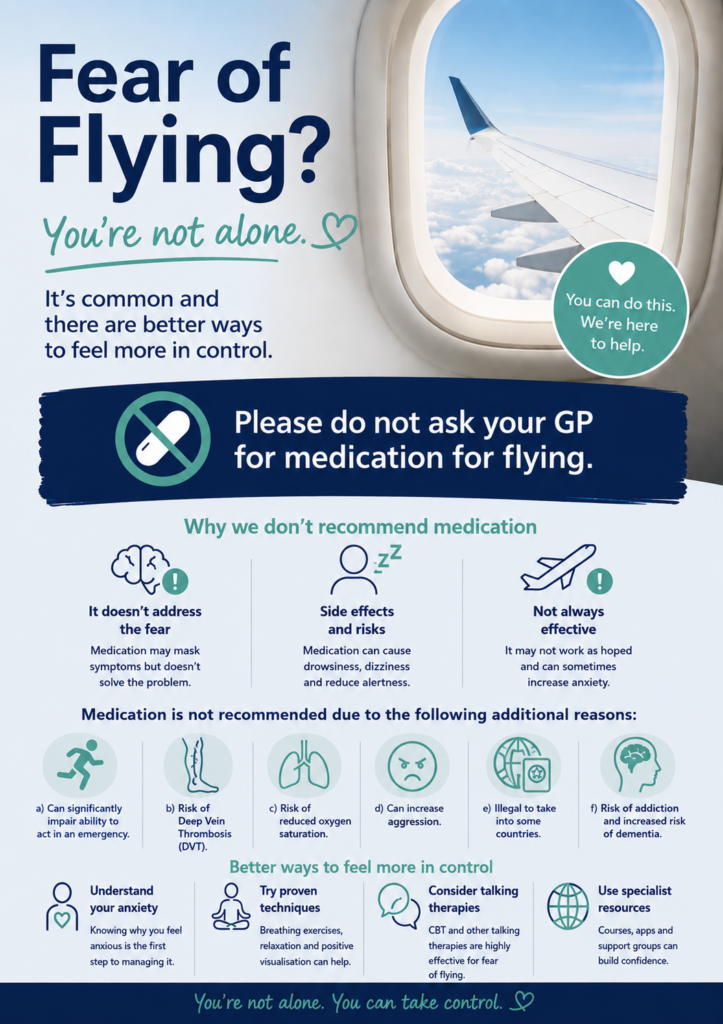
If you experience a fear of flying, you are not alone; it is a common issue, and there are better ways to help you feel more in control.
Please do not ask your GP for medication for flying.
Why We Do Not Recommend Medication
Medication is not recommended for flying due to the following reasons and potential risks:
-
Does not solve the root issue: Medication may mask symptoms, but it does not address or solve the fear itself.
-
Side effects: It can cause drowsiness, dizziness, and reduced alertness.
-
Not always effective: It may not work as hoped and can sometimes increase anxiety.
-
Impaired emergency response: It can significantly impair your ability to act in an emergency.
-
Risk of DVT: It carries a risk of Deep Vein Thrombosis (DVT).
-
Reduced oxygen: It poses a risk of reduced oxygen saturation.
-
Behavioral changes: It can increase aggression.
-
Travel legality: It is illegal to take certain prescribed medications into some countries.
-
Long-term health risks: It carries a risk of addiction and an increased risk of dementia.
Better Ways to Feel in Control
Rather than relying on medication, there are evidence-based strategies to help manage flight anxiety:
-
Understand your anxiety: Knowing why you feel anxious is the essential first step toward managing it.
-
Try proven techniques: Breathing exercises, relaxation methods, and positive visualisation can significantly help.
-
Consider talking therapies: Cognitive Behavioural Therapy (CBT) and other talking therapies are highly effective for fear of flying.
-
Use specialist resources: Dedicated courses, apps, and support groups can help build your confidence.
|
 |

